
Professor and Head in P.G. Dept. of English and Research Centre
Magadh University, Bodh-Gaya
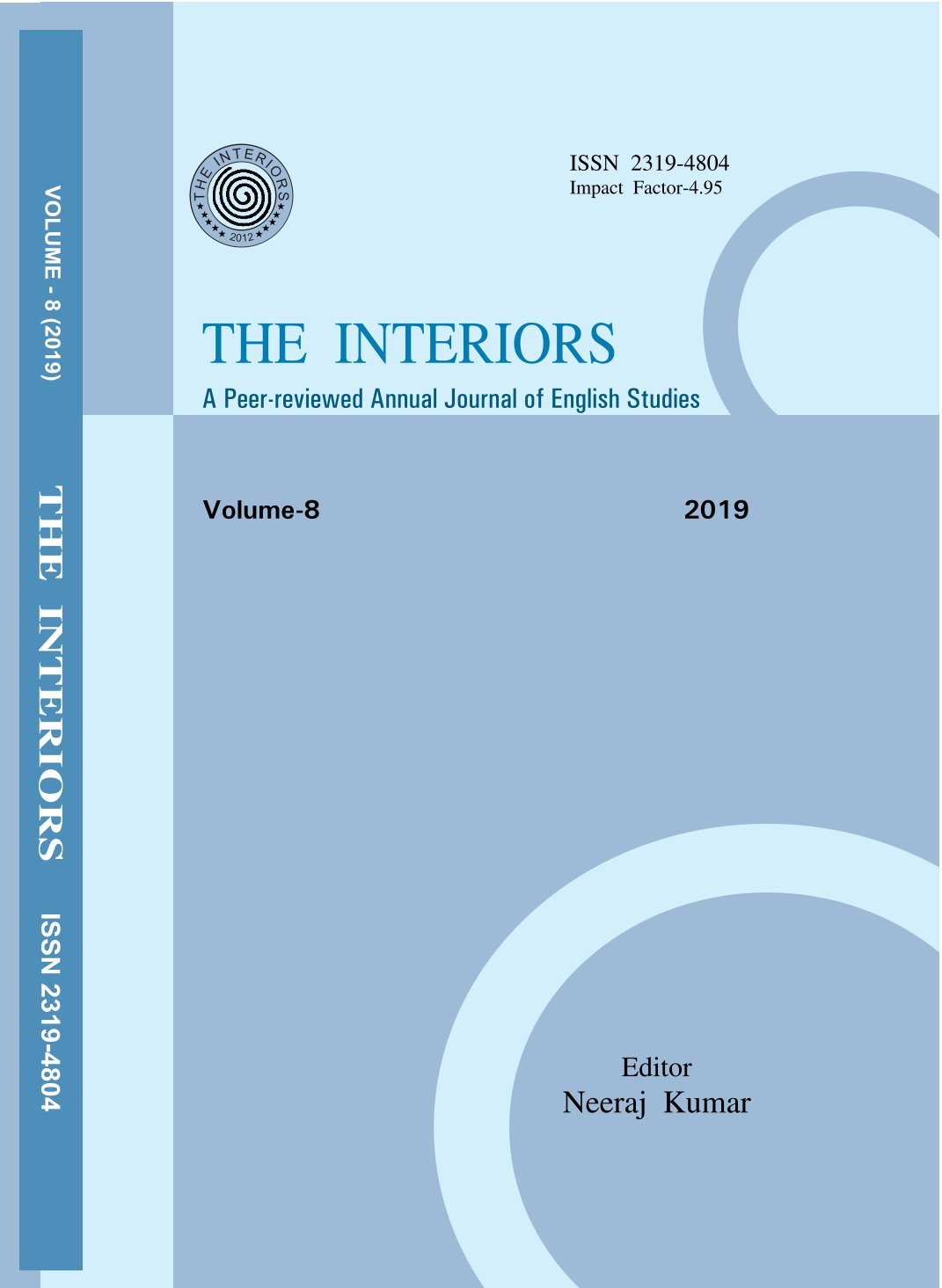
The Interiors Volume-8-Issue-1
The Interiors-vol-8-Issue-1
Indian writing in English, of late, has established its reputation not only because of Indian poets and novelists, but also because of some dramatists making their mark worldwide because of their delineation of contemporary realities. Mahesh Datta...
In his classic novel The Outsider (1942), Camus depicts Meursault as such kind of extreme existentialist individual who is indifferent about his life and who refuses to conform to social norms. We, the readers of this novel, are stopped by his ast...
With The Ministry of Utmost Happiness (2017) Arundhati Roy returns to fiction after twenty years of non-fiction and political journalism. With her long-awaited second novel, Roy also leaves behind the ambiguous status of the single-novel author. He...
The meaning of a word is decided by the sentence in which it is used and the meaning of a sentence becomes clear when it is used in a particular context. A textual meaning also varies from different perspectives and a text cannot mean fully if som...
Mulk Raj Anand is one of the pioneering Indian writers in English in the postcolonial era. He gained international fame and recognition for his gallant and audacious writings in support of the marginalized and oppressed. His critical writings cert...
Arun Kolatkar’s Jejuri (1976) is an ironic comment on the presentday condition of Hinduism. The rational, secular protagonist finds Jejuri environment steeped in commercial values, the dilapidation and general decadence that oppress the poet’s sens...
Indian Aesthetics has been under the spell of the poetics of Sanskrit or the aesthetic theory of European literature. It has proved itself a big failure to wear a pan Indian aesthetic perspective. The conventional literary output, in other words,...
Indira Goswami occupies an important place in literature. Her short stories have varied themes which range from nineteen thirties to the present time. Her stories have universality. They deal with the harsh social reality. Dr. Goswami wielded the...
Tennessee Williams is one of the most distinguished playwrights in the history of American drama. He has tremendous will power to explore the dark areas of human desire and compulsion. The present study is an analysis of Tennesse Williams's play S...
One often notices mutual bias, mistrust and a hurry to dismiss each other among the two genders. The cultural background, socio-political angles related to division of rights and duties, relative importance and relevance make this mistrust and cla...
Henrik Ibsen, a Norwegian playwright, produced the three act play Ghosts on December 13, 1881. The play proved to be a real uproar with its publication. He, who earned fame, also faced criticism for his daring move of producing the play that was g...
Dickens was the most successful and popular writer of his generation. The present paper will study a selection of his novels, as well as a range of his journalism and short fiction in its contemporary cultural, social and political contexts. Drawi...
Nayantara Sahgal, the second daughter of Vijaya Laxmi Pandit and the child of a rich heritage was highly influenced by the freedom struggle politics and learnt to accept many unusual happenings as matters of normal occurrence. Her all novels not o...
Amitav Ghosh is one of the most prominent novelists of the present age. He handles the problem of alienation brilliantly in his novels. His characters are often seen struggling with identity crisis, alienation and quest for freedom. Some of the ch...
The present paper describes idea of Ngugi about the situations of women in Kenyan society. He describes how women are treated only as material to be used and oppressed.They are thing of sex and enjoyment only. Ngugi portrays the women who suffered...